Introduction
The logistics and warehousing industry has undergone a remarkable transformation over the past decade. What was once a labor-intensive sector dependent on manual processes has evolved into a technology-driven industry focused on speed, accuracy, visibility, and efficiency.
As businesses face growing customer expectations and increasingly complex supply chains, technology has become a necessity rather than a luxury. Today’s customers expect fast deliveries, real-time tracking, accurate order fulfillment, and seamless service experiences. Meeting these expectations requires advanced logistics solutions powered by modern technology.
From Warehouse Management Systems (WMS) and Artificial Intelligence (AI) to the Internet of Things (IoT) and automation, technology is revolutionizing how goods are stored, managed, and delivered.
Businesses that embrace these innovations gain a competitive advantage through improved efficiency, reduced costs, and enhanced customer satisfaction.
Why Technology Matters in Logistics
The logistics industry manages the movement of products from manufacturers to end customers. Any inefficiency in this process can result in delays, increased costs, and poor customer experiences.
Technology helps businesses:
- Improve operational efficiency
- Reduce manual errors
- Enhance inventory visibility
- Speed up order fulfillment
- Lower operating costs
- Improve customer satisfaction
As supply chains become more complex, technology provides the tools necessary to manage operations effectively and maintain competitiveness.
The Evolution of Logistics Technology
Traditional logistics operations relied heavily on paper records, manual inventory counts, and limited communication systems.
Common challenges included:
- Inventory inaccuracies
- Delayed shipments
- Poor visibility
- Slow decision-making
- High labor costs
Today, digital transformation has introduced advanced systems that automate processes and provide real-time information across the supply chain.
This shift has significantly improved logistics performance and operational reliability.
1. Warehouse Management Systems (WMS)
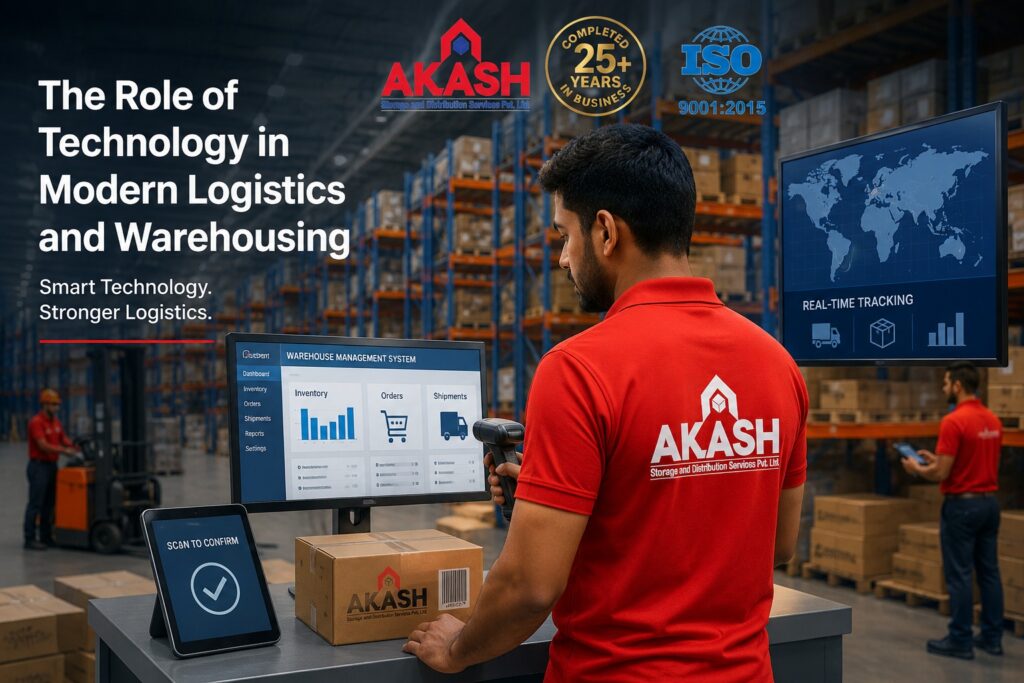
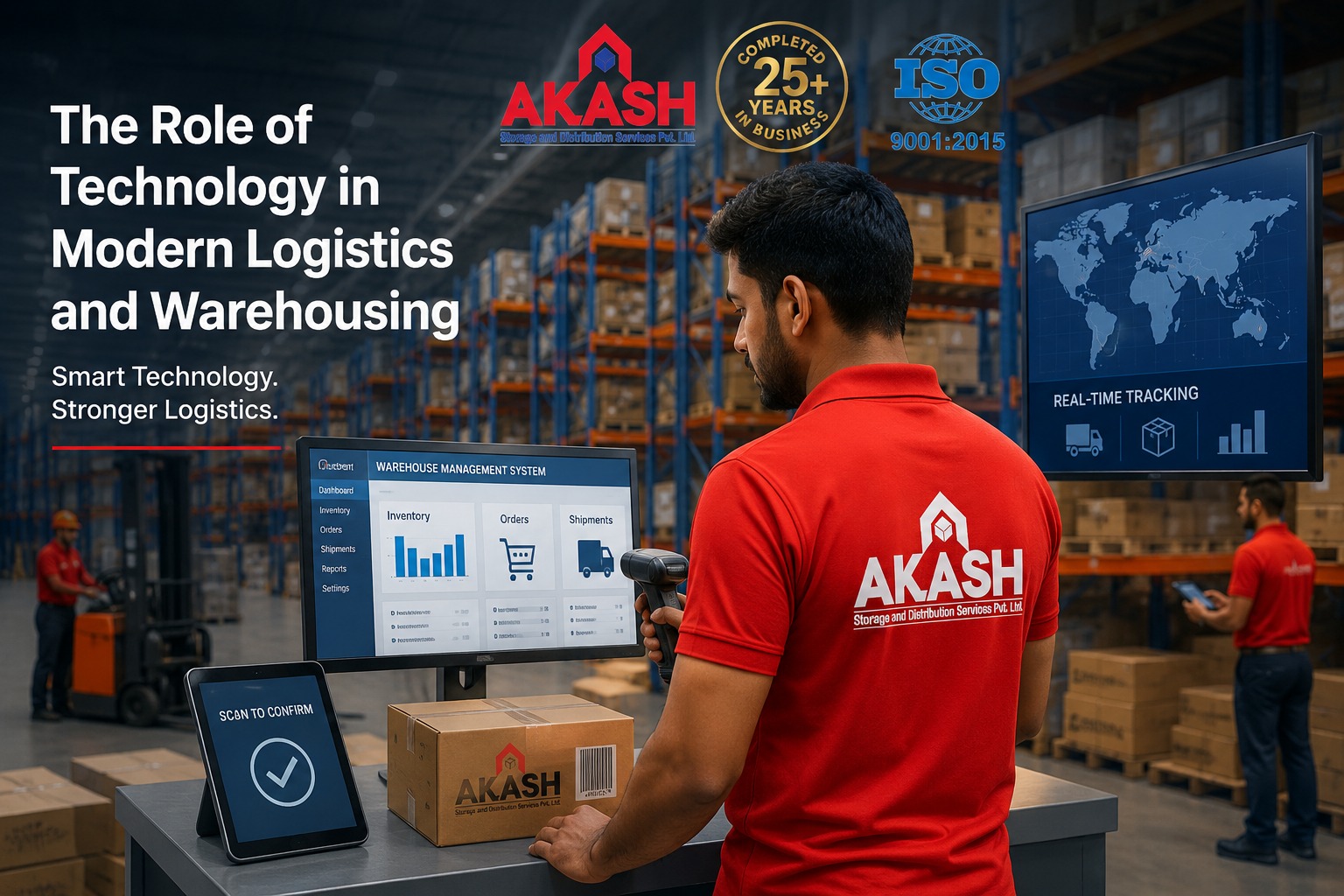
A Warehouse Management System (WMS) is one of the most important technologies in modern warehousing.
A WMS helps businesses:
- Track inventory in real time
- Manage warehouse operations
- Optimize storage space
- Improve order accuracy
- Monitor inventory movement
With a WMS, warehouse managers gain complete visibility into stock levels and operational performance.
Benefits of WMS
- Improved inventory accuracy
- Faster order processing
- Better warehouse organization
- Reduced operational costs
- Enhanced productivity
As warehouses grow larger and more complex, a WMS becomes essential for maintaining efficiency.
2. Real-Time Inventory Tracking
Real-time inventory tracking allows businesses to know exactly where their inventory is at any given moment.
Technologies such as:
- Barcode scanning
- RFID (Radio Frequency Identification)
- Mobile inventory systems
provide instant updates on inventory movement.
Advantages
- Reduced inventory discrepancies
- Faster stock verification
- Better inventory planning
- Improved customer service
Real-time tracking ensures that businesses can respond quickly to demand changes and maintain accurate inventory records.
3. Artificial Intelligence (AI) in Logistics
Artificial Intelligence is becoming increasingly important in logistics and warehousing.
AI systems analyze large amounts of data to identify patterns and support decision-making.
Applications include:
Demand Forecasting
AI predicts future inventory requirements based on historical sales data and market trends.
Route Optimization
AI helps transportation providers identify the most efficient delivery routes.
Inventory Optimization
Businesses can maintain optimal stock levels while reducing carrying costs.
Workforce Planning
AI improves labor allocation and warehouse productivity.
Organizations using AI gain valuable insights that improve operational performance and profitability.
4. Internet of Things (IoT)
The Internet of Things (IoT) connects devices and equipment through the internet, allowing real-time monitoring and communication.
In warehousing and logistics, IoT applications include:
- Asset tracking
- Environmental monitoring
- Equipment performance monitoring
- Fleet management
For example, IoT sensors can monitor warehouse temperature and humidity levels, helping businesses protect sensitive inventory.
Benefits of IoT
- Improved visibility
- Reduced equipment downtime
- Better asset utilization
- Enhanced inventory control
IoT provides valuable operational data that supports proactive decision-making.
5. Warehouse Automation
Automation is transforming warehouse operations by reducing manual labor and improving efficiency.
Common automation technologies include:
Automated Storage Systems
Store and retrieve inventory automatically.
Conveyor Systems
Move products efficiently throughout the warehouse.
Automated Sorting Systems
Improve order processing speed and accuracy.
Robotic Assistance
Support picking, packing, and inventory movement tasks.
Benefits of Warehouse Automation
- Increased productivity
- Reduced labor costs
- Improved accuracy
- Faster fulfillment
As technology becomes more affordable, automation is becoming accessible to businesses of all sizes.
6. Transportation Management Systems (TMS)
Transportation Management Systems help businesses plan, execute, and monitor transportation activities.
A TMS enables companies to:
- Optimize shipping routes
- Track shipments
- Manage transportation costs
- Improve delivery performance
Benefits include:
- Lower transportation expenses
- Improved shipment visibility
- Better customer communication
- Enhanced delivery reliability
Transportation efficiency plays a critical role in overall supply chain performance.
7. Cloud Computing in Logistics
Cloud technology has transformed how logistics data is stored and accessed.
Cloud-based logistics systems allow businesses to:
- Access information remotely
- Share data across locations
- Improve collaboration
- Reduce IT infrastructure costs
Cloud solutions provide flexibility and scalability, making them ideal for growing businesses.
Key Benefits
- Real-time access to information
- Improved security
- Enhanced data backup
- Greater operational flexibility
Cloud computing supports digital transformation throughout the logistics industry.
8. Data Analytics and Business Intelligence
Data has become one of the most valuable assets in modern logistics.
Advanced analytics tools help businesses:
- Monitor performance
- Identify inefficiencies
- Improve forecasting
- Optimize inventory levels
Key performance indicators (KPIs) commonly analyzed include:
- Order accuracy
- Inventory turnover
- Delivery performance
- Warehouse productivity
Businesses that leverage data effectively can make better decisions and improve operational outcomes.
How Technology Improves Customer Satisfaction
Customer expectations continue to rise.
Today’s customers expect:
- Fast deliveries
- Real-time tracking
- Accurate orders
- Transparent communication
Technology helps businesses meet these expectations by improving visibility and operational efficiency.
Benefits include:
Faster Order Fulfillment
Automated processes reduce order processing times.
Improved Accuracy
Technology minimizes human errors.
Enhanced Communication
Real-time tracking keeps customers informed.
Better Service Levels
Reliable operations lead to higher customer satisfaction.
Happy customers are more likely to become repeat buyers and recommend the business to others.
Challenges of Technology Adoption
Despite its benefits, implementing technology can present challenges.
Common obstacles include:
Initial Investment Costs
Advanced systems require financial investment.
Employee Training
Staff must learn how to use new technologies effectively.
System Integration
Technology solutions must integrate with existing business systems.
Change Management
Organizations must adapt processes and workflows to support digital transformation.
However, the long-term benefits often outweigh the initial challenges.
Future Trends in Logistics Technology
The future of logistics will continue to be shaped by innovation.
Emerging trends include:
Artificial Intelligence Expansion
More advanced predictive analytics and automation.
Robotics
Increased use of warehouse robots and automated equipment.
Digital Supply Chains
Greater integration and visibility across logistics networks.
Autonomous Vehicles
Potential future applications in transportation and delivery.
Smart Warehousing
Highly connected and automated warehouse environments.
Businesses that embrace these trends will be better positioned for future success.
Conclusion
Technology has become the driving force behind modern logistics and warehousing. From Warehouse Management Systems and automation to Artificial Intelligence and IoT, technology is helping businesses improve efficiency, reduce costs, and deliver superior customer experiences.
As supply chains become increasingly complex, organizations must continue investing in innovative solutions that enhance visibility, productivity, and operational performance.
Companies that successfully adopt technology will gain a significant competitive advantage while building stronger, more resilient supply chains for the future.
Transform Your Logistics Operations with Akash Storage
Akash Storage & Distribution Services Pvt. Ltd. combines modern warehousing practices with advanced logistics solutions to help businesses improve efficiency and supply chain performance.
Contact us today to discover how technology-driven warehousing and logistics solutions can support your business growth.