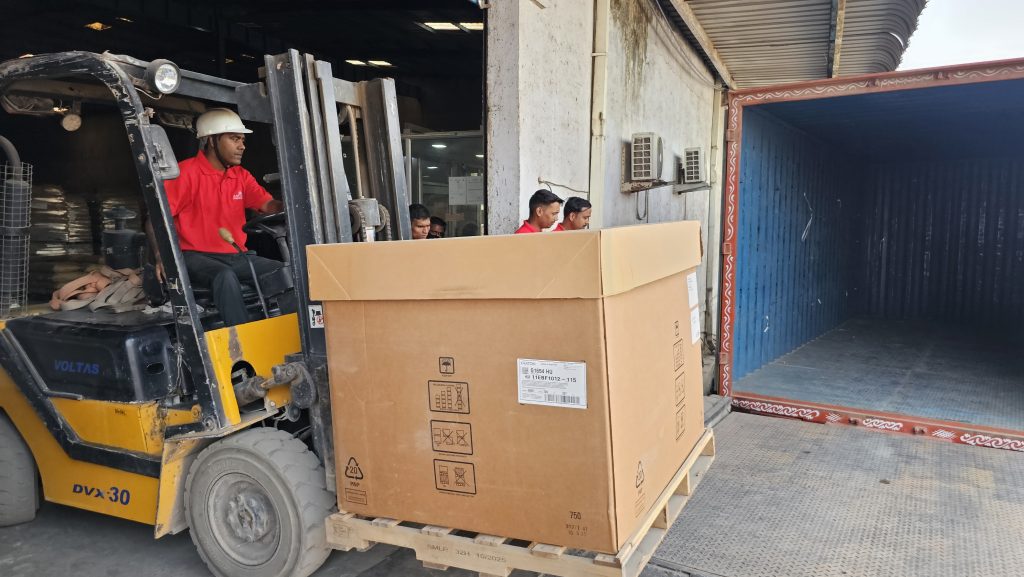
Where inventory errors really begin
Most stock mismatches don’t start in the racks. In fact, they start at the receiving dock, with a weak warehouse receiving process.
Picture a busy morning. A truck arrives, the driver is in a hurry, and your team counts the cartons quickly. Someone signs the challan, and the team moves the pallets to the nearest empty space. Nobody prints labels, and the supervisor plans to update the system later in the day.
Each shortcut looks harmless on the day. However, a month later, the same shortcuts show up as a stock statement that doesn’t match the physical count. Then an order fails because the system shows stock that isn’t there. Finally, an auditor asks a question nobody can answer.
That’s why effective warehousing starts with a disciplined warehouse receiving process. When your team gets the first step right, every step after it becomes more reliable. In this guide, we explain why receiving matters so much, walk through the five steps that protect inventory accuracy, and share the mistakes to avoid.
Why receiving decides inventory accuracy
Receiving is the moment physical goods turn into system records. As a result, whatever your team records here becomes the starting point for storage, picking, dispatch, billing, and audits.
Here is why that matters:
- Errors multiply. One wrong quantity at inward affects every stock report that follows. Moreover, the error keeps growing until someone counts the stock again.
- Errors become hard to trace. Suppose your team finds a shortage at dispatch. It could have started at receiving, in storage, or during picking. Without a clean inward record, nobody can say which.
- Errors cost money. For example, you lose transit damage claims, you pay for short supplies, and you write off stock at year-end. In most cases, all three trace back to weak receiving.
- Errors hurt customer service. If the system says stock is available and it isn’t, the order fails at the worst possible moment. Consequently, your customer loses trust in you.
In short, a disciplined receiving process gives you clean data from day one, and clean data is the foundation of efficient warehousing and inventory management.
The 5-step warehouse receiving process
A strong process doesn’t need expensive software to begin with. Instead, it needs clear steps that every team member follows on every delivery. Here are the five steps we recommend.
Step 1: Verify the shipment
First, match the delivery against the invoice, purchase order, and transport documents before anyone signs. Next, count every carton or pallet and check for visible damage, broken seals, or wet packaging.
If you find a problem, write the shortage or damage on the delivery challan and take clear photos. That way, you hold the evidence you need to raise a claim with the supplier, transporter, or insurer. Otherwise, a signed challan tells everyone that you accepted the goods in full and in good condition.
Step 2: Document the receipt.
Then raise the goods receipt note (GRN) at the time of receipt, not at the end of the shift. A complete GRN captures the date and time, supplier, vehicle number, quantity received, condition, and any variance against the order.
Timing matters here. When your team raises the GRN later, the goods sit in the warehouse but stay invisible in the system. Meanwhile, sales teams may promise stock that doesn’t show up or reorder stock you already hold.
Step 3: Identify every item.
After that, label each unit, carton, or pallet with its SKU, batch or lot number, and manufacturing or expiry date where it applies.
Clear labels make FIFO (first in, first out) and FEFO (first expired, first out) possible later. This step matters even more for pharma, FMCG, food, and chemical products, because dispatching an expired or wrong batch can lead to returns, penalties, and lost customers.
Step 4: Put away systematically
Now move the goods to an assigned location instead of the nearest empty space. In general, fast-moving items go closer to dispatch, heavy items go on lower levels, and your team keeps incompatible products apart.
Most importantly, record the exact bay or bin. When pickers know exactly where each item sits, they find it in seconds rather than minutes. Over hundreds of orders a day, those minutes add up to real productivity.
Step 5: Update the system immediately.
Finally, update the stock record the moment the goods reach their location. The system should show what is in the warehouse and exactly where it sits.
When the system matches the shelf from the first hour, you can trust every report that follows. Above all, you can make decisions on live data instead of guesses.
Common mistakes in the warehouse receiving process
Even experienced teams fall into these habits, especially during peak season. Therefore, it helps to know them in advance.
| Mistake | What it leads to |
|---|---|
| Signing the challan before counting | You can’t claim shortages from the supplier or transporter |
| Raising the GRN hours or days later | Stock sits in the warehouse but stays invisible in the system. |
| Skipping batch and expiry details | FIFO and FEFO fail, and expired stock goes out. |
| Putting goods in any empty space | Pickers waste time searching, and items go missing. |
| Taking no photos of damaged goods | Insurers and suppliers reject your claims. |
| Receiving without a PO reference | You accept and pay for wrong or excess stock. |
In every case, the fix is the same: follow the five steps on every delivery, not only when the dock is quiet.
How to measure your receiving performance
What you measure, you can improve. So track these four simple indicators every month:
- Receiving accuracy: the share of GRNs that match the later physical count. Aim for close to 100%.
- Dock-to-stock time: the hours between a truck’s arrival and the stock showing as available in the system. Shorter is better.
- GRN timeliness: the share of GRNs your team raises on the same day as receipt.
- Claims recovered: the value of shortage and damage claims you successfully recover from suppliers and transporters.
Together, these numbers tell you whether your receiving process protects your inventory or quietly leaks money.
Receiving checklist for your team
Print this checklist and keep it at the receiving dock:
- Match the delivery against invoice, PO, and transport documents
- Count cartons or pallets and check their condition
- Note shortages and damage on the challan and photograph them
- Raise the GRN at the time of receipt
- Label every item with SKU, batch, and date
- Put goods away in an assigned, recorded location
- Update system stock before the shift ends
How Akash Storage handles receiving
At Akash Storage, we build receiving into our system instead of leaving it to memory or paperwork.
- We raise a GRN in our dashboard at every inward receipt.
- Clients see their stock by quantity, bay, and batch on a live dashboard.
- We log every dispatch with quantity, vehicle, and timestamp.
- We enforce FIFO and FEFO and share daily, weekly, or monthly stock statements in Excel or PDF.
In addition, we have operated in Bhiwandi since 1999. We also run port-linked operations at Kalamboli and JNPT and deliver across Mumbai and Thane on the same day with our own fleet.
Conclusion
Inventory accuracy doesn’t begin with year-end stock counts or expensive software. Rather, it begins at the receiving dock every time a truck arrives. Verify every shipment, document it on time, label every item, put it away in the right place, and update the system immediately. Follow these five steps consistently, and you will spend far less time chasing mismatches and far more time growing your business.
Manage your inbound and warehouse operations with Akash Storage.
Book a site visit at akashwarehouse.com or call +91 93218 70431.
One Partner. Zero Follow-ups. Complete Control.
Frequently asked questions
1. What is the warehouse receiving process? The warehouse receiving process covers every step a warehouse takes to accept goods: it verifies the delivery, records it in a GRN, labels the items, puts them away, and updates the stock records.
2. What is a GRN in warehousing? A goods receipt note (GRN) confirms that the warehouse received the goods, in what quantity and in what condition. In addition, it forms the basis for supplier payments and claims.
3. What is put-away? Put-away means moving received goods from the dock to their assigned storage location and recording that location in the system.
4. How does receiving affect inventory accuracy? Every stock figure starts with the receiving record. So if your team records the wrong quantity, batch, or location at inward, every later report carries the same error until a physical count catches it.
5. What should I do if goods arrive damaged or short? First, note the shortage or damage on the delivery challan before you sign it. Then take photos and record the variance in the GRN. As a result, you hold the evidence you need for claims with the supplier, transporter, or insurer.
6. Can a 3PL handle receiving for importers? Yes. A 3PL can receive cargo after customs clearance, check it against shipping documents, record it, and store it. For example, Akash Storage receives import cargo at Kalamboli after JNPT clearance.

