Introduction
The logistics industry has undergone a significant transformation over the last decade. Traditional logistics operations that relied heavily on manual processes are now being replaced by advanced digital systems, automation, and real-time tracking technologies. As global supply chains become more complex and customer expectations continue to rise, businesses are increasingly adopting innovative logistics technologies to improve operational efficiency and maintain a competitive advantage.
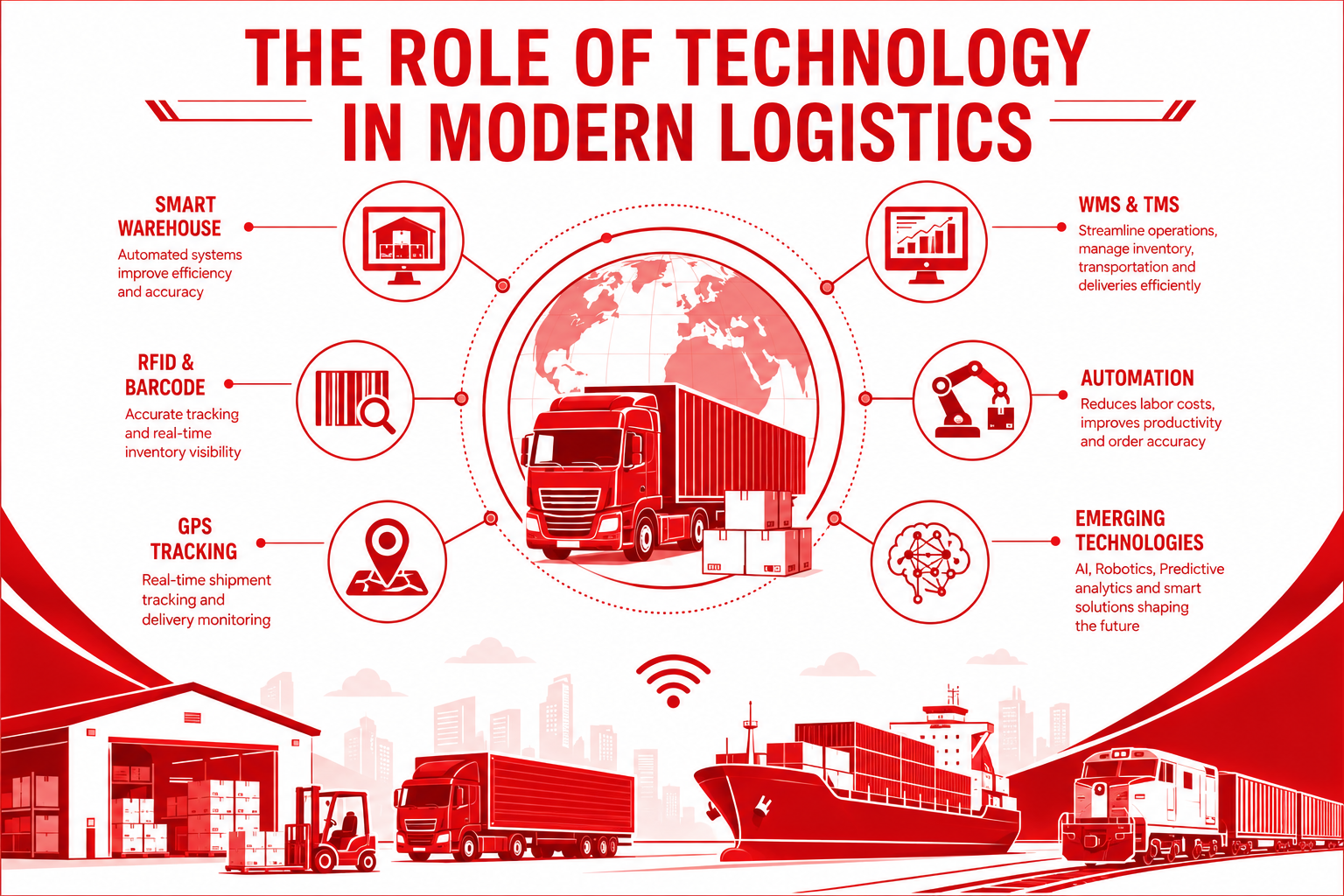
Technology in modern logistics is no longer a luxury—it is a necessity. From warehouse management systems and transportation management platforms to artificial intelligence and smart warehouses, technological innovations are helping businesses streamline operations, reduce costs, improve accuracy, and enhance customer satisfaction.
This article explores the key technologies shaping modern logistics and how they are revolutionizing supply chain management.
Why Technology Matters in Logistics
Logistics plays a crucial role in ensuring products move efficiently from manufacturers to customers. Any delay, inventory discrepancy, or delivery issue can impact customer satisfaction and business profitability.
Modern logistics technology helps companies:
- Increase operational visibility
- Improve inventory accuracy
- Reduce human errors
- Optimize transportation routes
- Enhance customer communication
- Lower operational costs
- Improve decision-making through real-time data
As businesses expand and customer demands become more sophisticated, technology provides the tools needed to manage logistics operations efficiently and effectively.
Key Technologies Transforming Modern Logistics
1. Warehouse Management Systems (WMS)
A Warehouse Management System (WMS) is one of the most important technologies in modern warehousing and logistics.
A WMS helps businesses manage inventory, monitor stock levels, track product movement, and optimize warehouse operations. It provides real-time visibility into warehouse activities, helping managers make informed decisions and improve productivity.
Benefits of WMS:
- Real-time inventory tracking
- Improved warehouse organization
- Faster order processing
- Reduced inventory discrepancies
- Better labor management
- Increased order accuracy
By implementing a robust WMS, businesses can significantly improve warehouse efficiency and customer service levels.
2. Transportation Management Systems (TMS)
Transportation Management Systems help businesses plan, execute, and optimize the movement of goods.
A TMS allows logistics managers to monitor shipments, select optimal routes, manage carriers, and reduce transportation expenses. These systems provide valuable insights into transportation performance and delivery efficiency.
Benefits of TMS:
- Route optimization
- Reduced transportation costs
- Improved shipment visibility
- Better carrier management
- Enhanced delivery performance
- Real-time shipment monitoring
Companies using TMS solutions often experience faster deliveries and improved customer satisfaction.
3. RFID and Barcode Technology
Radio Frequency Identification (RFID) and barcode systems have revolutionized inventory management and asset tracking.
These technologies allow businesses to capture and process inventory information quickly and accurately. Instead of relying on manual counting, warehouse staff can scan products instantly, reducing errors and improving inventory accuracy.
Benefits of RFID and Barcode Systems:
- Faster inventory tracking
- Improved stock accuracy
- Reduced manual errors
- Enhanced warehouse productivity
- Better inventory visibility
- Efficient order fulfillment
RFID technology is especially useful for businesses managing large volumes of inventory across multiple locations.
4. GPS Tracking and Real-Time Visibility
Customers today expect complete transparency regarding their shipments. GPS tracking technology enables businesses to monitor vehicles and shipments in real time.
With GPS-enabled logistics systems, businesses can track delivery progress, identify delays, and communicate accurate delivery updates to customers.
Benefits of GPS Tracking:
- Real-time shipment visibility
- Improved fleet management
- Enhanced route planning
- Reduced fuel consumption
- Better delivery performance
- Increased customer satisfaction
GPS tracking has become a standard feature in modern logistics operations, helping businesses provide a superior customer experience.
5. Cloud-Based Logistics Solutions
Cloud technology has transformed how logistics companies manage and access operational data.
Cloud-based platforms allow businesses to access information from anywhere, enabling better collaboration between warehouses, transportation teams, suppliers, and customers.
Advantages of Cloud Logistics Solutions:
- Centralized data management
- Improved collaboration
- Scalability
- Enhanced security
- Lower IT costs
- Real-time access to information
Cloud computing enables logistics organizations to become more agile and responsive to changing market conditions.
The Rise of Automation in Warehousing
Warehouse automation is rapidly becoming a critical component of modern logistics operations.
Automated technologies such as conveyor systems, automated storage and retrieval systems (ASRS), robotic picking systems, and automated sorting equipment help warehouses operate more efficiently.
Benefits of Warehouse Automation
Reduced Labor Costs
Automation reduces dependence on manual labor for repetitive tasks, helping businesses manage rising labor costs.
Increased Productivity
Automated systems can operate continuously, increasing throughput and improving warehouse performance.
Improved Order Accuracy
Automation minimizes human errors during picking, packing, and shipping processes.
Faster Order Fulfillment
Automated workflows accelerate order processing and delivery timelines.
Enhanced Workplace Safety
Automated equipment reduces the risk of workplace injuries associated with manual handling.
As e-commerce continues to grow, warehouse automation is becoming essential for meeting customer expectations regarding speed and accuracy.
Artificial Intelligence (AI) in Logistics
Artificial Intelligence is one of the most exciting developments in logistics technology.
AI-powered systems analyze large volumes of operational data to identify patterns, predict outcomes, and optimize logistics processes.
Applications of AI in Logistics
- Demand forecasting
- Inventory optimization
- Route planning
- Predictive maintenance
- Customer service chatbots
- Risk management
AI helps businesses make smarter decisions while improving efficiency throughout the supply chain.
Predictive Analytics and Data-Driven Decision Making
Modern logistics generates enormous amounts of data. Predictive analytics helps businesses transform that data into actionable insights.
Using historical and real-time information, predictive analytics can forecast inventory requirements, transportation demand, seasonal trends, and potential supply chain disruptions.
Benefits of Predictive Analytics
- Improved forecasting accuracy
- Reduced inventory costs
- Better demand planning
- Minimized supply chain risks
- Enhanced operational efficiency
Data-driven logistics strategies enable companies to stay ahead of market changes and customer demands.
Smart Warehouses: The Future of Logistics
The concept of smart warehousing combines automation, artificial intelligence, IoT devices, and advanced analytics to create highly efficient warehouse environments.
Smart warehouses provide:
- Real-time inventory visibility
- Automated inventory replenishment
- Intelligent storage allocation
- Predictive maintenance
- Enhanced operational control
These facilities represent the next evolution in warehouse management and are becoming increasingly popular among third-party logistics providers and large-scale distributors.
Future Trends in Logistics Technology
Several emerging technologies are expected to shape the future of logistics:
Robotics
Autonomous robots will continue improving warehouse productivity and order fulfillment speed.
Artificial Intelligence
AI-driven decision-making will become more sophisticated and accurate.
Internet of Things (IoT)
Connected devices will provide greater visibility throughout the supply chain.
Autonomous Vehicles
Self-driving delivery vehicles may transform last-mile logistics.
Blockchain Technology
Blockchain can improve transparency, security, and traceability across supply chains.
Digital Twins
Virtual supply chain models will help businesses simulate operations and improve planning.
Businesses that embrace these innovations will be better positioned to compete in an increasingly technology-driven marketplace.
Conclusion
Technology is fundamentally reshaping the logistics industry. From Warehouse Management Systems and Transportation Management Systems to RFID tracking, GPS monitoring, artificial intelligence, and warehouse automation, modern logistics solutions are helping businesses operate more efficiently than ever before.
Organizations that invest in logistics technology gain improved visibility, better inventory control, lower operational costs, enhanced customer satisfaction, and a stronger competitive advantage.
As supply chains continue to evolve, adopting innovative technologies will be essential for businesses seeking long-term growth and success. The future of logistics belongs to companies that embrace digital transformation and leverage technology to build smarter, faster, and more resilient supply chains.