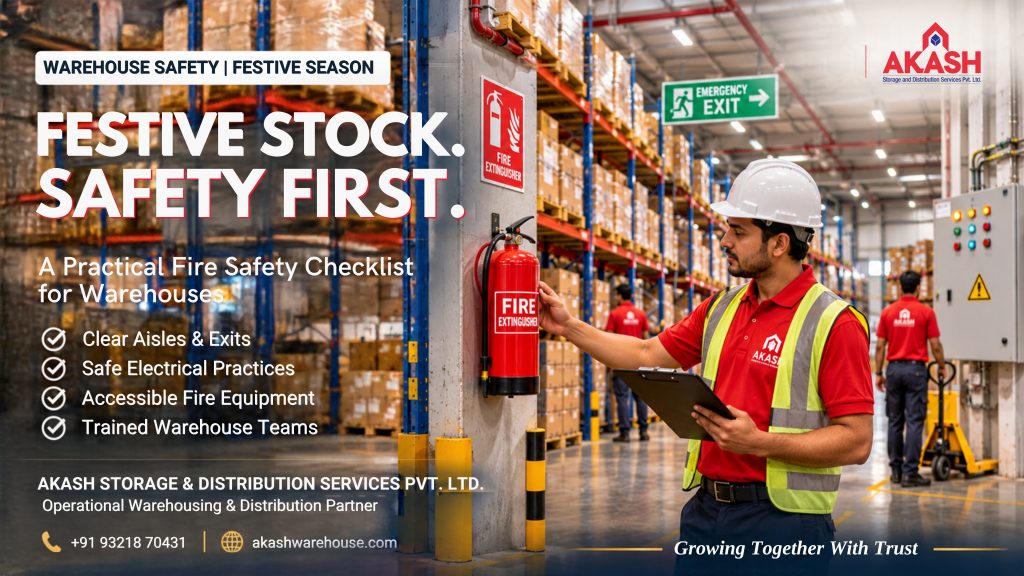
The festive season fills a warehouse faster than any other time of year. Stock arrives in bulk, aisles narrow, dispatch runs late into the evening, and the whole floor works at a higher tempo. In that rush, one risk is tempting to push aside: fire. A clear warehouse fire safety checklist is the simplest way to keep that risk in view when everyone is busiest.
This matters especially in Bhiwandi. Local reporting has recorded hundreds of warehouse fires across the cluster in recent years, in a belt that holds tens of thousands of godowns. The lesson is not panic. The lesson is routine. Fire safety is not a one-day inspection; it is a set of small habits, repeated, and a checklist keeps those habits honest when stock volumes climb.
Why festive stock raises the risk
First, there is simply more to burn. Higher stock means more packaging, more cartons and more shrink-wrap, often stacked closer together than usual. Fire spreads through fuel and air, and a crowded floor gives it both.
Second, the pace changes behaviour. When a team races to clear dispatches, housekeeping slips, exits get blocked by pallets, and temporary wiring appears for extra lighting or machines. Each shortcut is small on its own. Together, they turn an ordinary floor into a harder place to escape. A checklist exists to catch these shortcuts before they matter.
1. Housekeeping and stock stacking
Start with the floor itself. Keep packaging waste, broken pallets and loose wrapping clear of storage areas, and remove them at the end of every shift rather than once a week. Clutter is the fuel that turns a spark into a spread.
Next, check how stock is stacked. Leave clear gaps between stacks and the walls, keep a safe distance from light fittings and electrical panels, and never block sprinkler heads or fire points. As a rule, stock should never lean against a source of heat or hide a safety device.
2. Clear access and exits
Every aisle is also an escape route. During the peak, mark the main gangways and keep them free, even when space feels tight. A pallet parked in a walkway for “just an hour” is exactly what blocks a doorway during an emergency.
In addition, confirm that every exit door opens freely, that emergency exits are not chained or stacked shut, and that exit signs are visible from a distance. Then make sure the whole team knows where those exits are, not only the supervisors.
3. Electrical care
Electrical faults are among the most common warehouse fire causes, and the festive season adds load. Avoid daisy-chained extension boards, check that panels are not overloaded, and keep charging areas for forklifts and handheld scanners away from stored stock.
Furthermore, look for the obvious warning signs: warm sockets, frayed cables, flickering lights or a burning smell near a panel. If temporary wiring was added for the season, have a qualified electrician confirm it is safe rather than assuming it is.
4. Fire-fighting equipment
Equipment only helps if it works and people can reach it. Walk the floor and confirm that extinguishers are in place, in date, and matched to the right fire class for what is stored nearby. Keep each one unobstructed and clearly signed.
Then go further than the hardware. Check that enough staff on each shift actually know how to use an extinguisher, and that hydrants or hose points, where present, are accessible. Equipment behind a wall of festive cartons is equipment you do not have.
5. Emergency readiness
Finally, prepare for the moment you hope never comes. Display emergency contact numbers and the nearest fire station, agree an assembly point outside the building, and make sure at least one trained person is on every shift.
Before the peak, run a short briefing so new or temporary festive staff know the alarm, the exits and the assembly point. A five-minute walkthrough on day one is worth more than a thick manual no one reads.
Common fire-safety mistakes during the peak
6. Handling, charging and hot work
Beyond the fixed hazards, watch the activity on the floor. Forklift and scanner charging points generate heat, so keep them in a dedicated area away from stored stock and packaging, and never leave batteries charging unattended overnight.
Hot work is the other seasonal risk. If any repair, welding or cutting is needed during the peak, treat it as a controlled activity: clear the area of flammable packaging first, keep an extinguisher to hand, and never carry it out beside stacked stock. The same rule covers smoking, which belongs well away from any storage or loading area.
| Mistake | Why it happens | Better practice |
| Exits blocked by extra stock | Space feels short during the rush | Mark gangways and clear them every shift |
| Packaging waste left on the floor | No time to clear during busy runs | Remove waste at the end of each shift |
| Overloaded power boards | Temporary lighting and machines added | Have an electrician check seasonal wiring |
| Extinguishers hidden behind cartons | Stock stacked wherever there is room | Keep a clear zone around every fire point |
| New staff never briefed | Onboarding skipped in the rush | Five-minute safety briefing on day one |
How to measure your fire readiness
You cannot improve what you do not track. A few simple measures keep fire safety visible through the season:
- Percentage of extinguishers in date and unobstructed, checked weekly
- Number of exits confirmed clear at the start of each shift
- Count of housekeeping clear-outs completed per day
- Share of staff, including temporary workers, who have had the safety briefing
Team checklist at a glance
- Aisles and exits clear and marked
- Packaging waste removed this shift
- No stock against panels, lights or sprinklers
- Extinguishers in place, in date, reachable
- Seasonal wiring checked by an electrician
- Emergency numbers and assembly point displayed
- Every shift has a trained person present
How Akash Storage approaches safety
At Akash Storage, we have run warehousing in Bhiwandi since 1999, and a disciplined floor is part of how we operate every day. Clear aisles, organised stacking and recorded stock movement are not only good for accuracy; they also make a floor safer and easier to evacuate.
We treat the festive peak as a planned event, not a surprise. That means agreeing space and handling each client in advance, keeping the floor orderly as volumes rise, and reviewing readiness before the busiest weeks rather than during them.
Conclusion
Fire safety in a busy warehouse is not about one dramatic action. It is about many small ones, done consistently, when it would be easiest to skip them. Use this warehouse fire safety checklist before the festive rush, repeat it through the season, and keep the habits going once the peak has passed. Your stock, and more importantly your people, are worth the few minutes it takes.
If you would like a warehousing partner that treats discipline as part of daily operations, we would be glad to show you how we work.
Book a site visit at www.akashwarehouse.com or call +91 93218 70431.
One Partner. Zero Follow-ups. Complete Control.
Frequently asked questions
How often should a warehouse fire-safety check be done?
Core housekeeping and exit checks belong in every shift. Equipment checks, such as confirming extinguishers are in date and unobstructed, suit a weekly routine. A fuller review is worth running before any high-volume period, such as the festive season.
What are the most common causes of warehouse fires?
Electrical faults, overloaded wiring, poor housekeeping and careless handling of heat sources are among the most common. The festive peak adds risk because stock, packaging and temporary wiring all increase at once.
Where should fire extinguishers be placed in a warehouse?
Extinguishers should be near exits and high-risk points, clearly signed, unobstructed and matched to the fire class of nearby materials. Stock should never be stacked in front of them.
How can I keep exits clear during a busy season?
Mark the main gangways, treat them as no-stacking zones, and clear any stock parked in them at the end of each shift. Brief the team that exits stay clear even when space feels short.
Do temporary festive staff need fire-safety training?
Yes. A short briefing on day one covering the alarm, the nearest exits and the assembly point is enough to make a real difference, and it should apply to every worker on the floor, not only permanent staff.
Does Akash Storage handle festive-season stock?
Yes. We plan the festive peak with each client in advance, agreeing on space and handling, and we keep the floor orderly as volumes rise. You can book a site visit to see how we operate before the season begins.