
Search "best inventory management company in India" and you get a ranked listicle — rarely the information you actually need to sign a contract with confidence. The real risk isn't picking a vendor with a weak logo; it's discovering, three months in, that their system can't enforce FEFO on your pharma batches, can't produce a point-in-time stock snapshot for a GST audit, or can't show live cold-chain temperature graphs to your quality team.
This guide reframes that search into a buyer's evaluation checklist. Instead of trusting rankings, you'll learn the nine concrete capabilities to verify before you commit — from lot, bin, batch and expiry granularity to cold-chain IoT monitoring, zone-aware storage, and properly scoped portal access. Use it to ask sharper questions, compare 3PL providers on substance, and avoid expensive surprises.
Key takeaways
- Stop searching for the 'best' inventory management company and instead verify concrete capabilities against your own sector, SKU count and compliance needs.
- FEFO enforcement, lot/bin/batch traceability and point-in-time snapshots are non-negotiable for pharma, food and FMCG audits under CDSCO, FSSAI and GST.
- Usage-based pricing tied to SKUs, orders and storage units is the fairest 3PL model — always demand an itemised, GST-clear quote.
- Prove capability before signing: request a live portal login, a historical stock trace, and a blocked-pick FEFO demonstration.
Why 'Best Inventory Management Company in India' Is the Wrong Search
Typing "best inventory management company in India" into a search bar returns ranked listicles — and almost none of them tell you whether a provider can actually run your stock. The word "best" is meaningless without your context: a cold-chain pharma brand in Ahmedabad and an FMCG distributor in Pune need completely different things. The smarter move is to stop hunting for a ranking and start vetting capabilities against your own requirements.
Part of the confusion is that "inventory management" means two different things. There are software vendors — India already hosts dozens of inventory management system startups, per Tracxn — who sell you a tool and leave you to operate it. Then there are 3PL operators who deliver inventory management as a service: trained staff, physical warehouse zones, and the WMS inventory platform running together.
What a real inventory management service delivers
A genuine service does more than display stock counts. It enforces FIFO/FEFO on the floor, maintains lot level inventory and batch expiry tracking so nothing dispatches past its date, and gives you real-time stock visibility down to the bin. It handles inbound receiving, putaway, QA checks and outbound dispatch — the physical work software alone never touches.
This reframe also changes how you read inventory management pricing. A software licence and a usage-based 3PL contract are not comparable line items, so "inventory management cost" only makes sense once you know which model you are buying. The nine capabilities that follow give you a checklist to verify before you sign — not a popularity contest to trust blindly.
Real-Time Stock Visibility Across Multiple Warehouses
If you run stock across a Bhiwandi godown, a Chennai cold store and a Gurugram fulfilment hub, a single dashboard that updates once a night is not real-time stock visibility — it is a report with a delay. Before you sign with any inventory management company in India, ask the provider to prove, with a live login, that stock levels move the moment goods are received, picked or dispatched at every location simultaneously.
What genuine WMS inventory sync looks like
A capable WMS inventory platform reflects each barcode scan — inbound putaway, pick, pack and dispatch — against the correct bin, zone and warehouse in seconds. Verify that a dispatch from one hub instantly reduces available-to-promise stock everywhere, so your online channel never oversells. Ask how conflicts are handled when two orders chase the same unit across sites. Confirm the sync is bidirectional with your ERP or marketplace, not a manual CSV upload.
Lot, batch and expiry granularity
Aggregate quantities hide risk. Insist on lot level inventory and batch expiry tracking so you can see exactly which lot sits in which bin, when it expires, and whether FIFO/FEFO is being enforced automatically. For pharma, food and cosmetics clients, this is the difference between a clean audit and written-off stock.
Point-in-time snapshots
Live numbers answer "what do I have now." Point-in-time snapshots answer "what did I have on 31 March at GST cut-off," which matters for reconciliation, stock audits and insurance claims. Ask whether the system can reconstruct exact positions for any past date and location.
Finally, tie these capabilities to inventory management pricing. A transparent inventory management service should show how real-time visibility and snapshot features affect your inventory management cost — not bury them in opaque line items.
Batch Expiry Tracking: Verifying a True FIFO/FEFO Inventory System
When you evaluate an inventory management company in India, how it handles dated stock separates a serious operator from a basic storage provider. The distinction comes down to two rotation rules — FIFO and FEFO — and whether they are enforced in software or left to warehouse staff memory.
FIFO vs FEFO: The Critical Difference
FIFO (First-In, First-Out) dispatches the oldest received stock first. That works for goods where age roughly tracks shelf life. FEFO (First-Expiry, First-Out) dispatches the stock that expires soonest — regardless of when it arrived. A batch received later but expiring earlier ships first. For anything with an expiry date, FEFO is the correct rule, because receipt order and expiry order often diverge across batches and suppliers.
Why Enforcement Must Happen at the System Level
A genuine inventory management service tracks stock at lot level inventory granularity — every lot, bin, batch and expiry date captured at inbound receiving. When a picker scans for dispatch, the WMS inventory logic should surface the first-expiring batch automatically and block picks that violate the rule. If rotation depends on someone reading cartons manually, expired stock will eventually ship. Verify that batch expiry tracking is built into the picking workflow, not just recorded on a label.
Why It Matters for Pharma, FMCG and Food
For pharmaceutical clients, dispatching expired or short-dated drugs is a regulatory and patient-safety failure under CDSCO norms. FMCG and packaged-food brands face retailer rejections, FSSAI compliance issues, and quiet margin erosion from write-offs. Real-time stock visibility of expiry dates lets you spot ageing batches and move them before they become dead stock.
Ask any prospective inventory management company in India to demonstrate FEFO enforcement live in their portal — point-in-time batch snapshots, near-expiry alerts and a blocked-pick example. This capability directly affects both your compliance exposure and your inventory management cost through reduced wastage.
FIFO vs FEFO: The Rotation Rules Compared
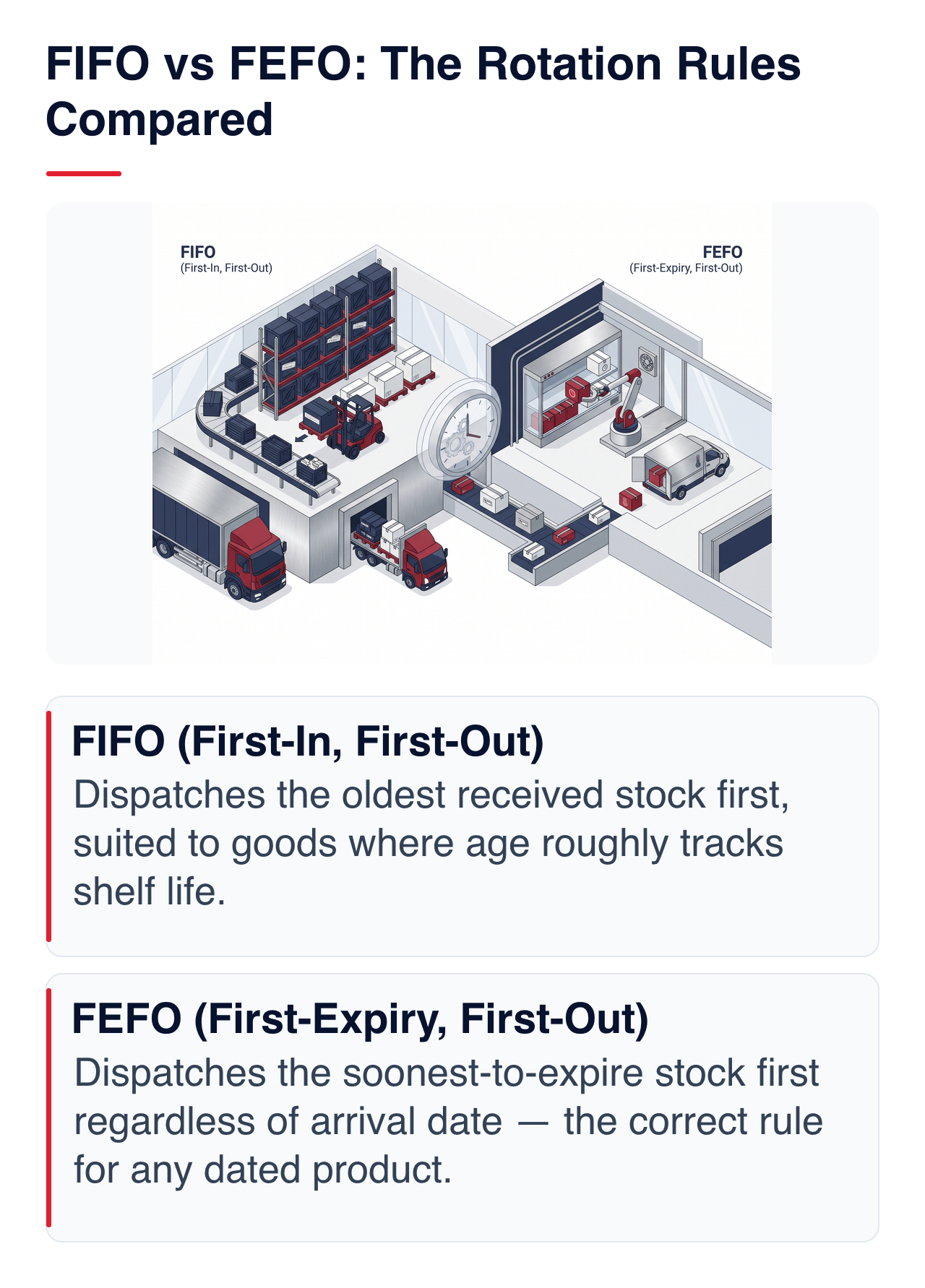
Text version of this infographic
- FIFO (First-In, First-Out). Dispatches the oldest received stock first, suited to goods where age roughly tracks shelf life.
- FEFO (First-Expiry, First-Out). Dispatches the soonest-to-expire stock first regardless of arrival date — the correct rule for any dated product.
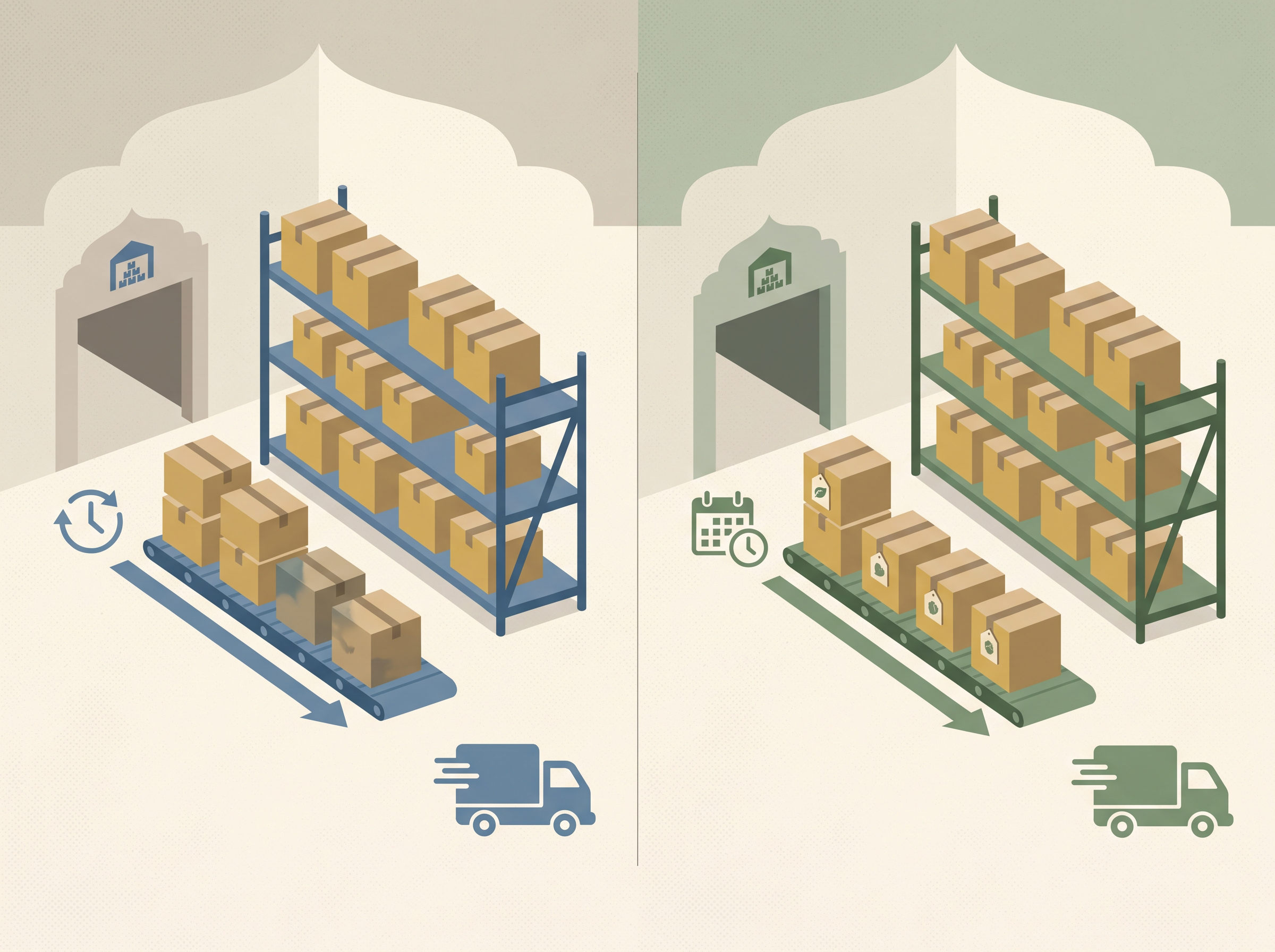
Lot and Bin Level Inventory Tracking You Can Audit
Many vendors claim "real-time stock visibility," but ask a sharper question: can they trace a single unit back to its exact batch, bin, and receipt document? That is the difference between a basic spreadsheet count and a genuinely auditable inventory management service. For regulated categories — pharma, food, FMCG, agrochemicals — this traceability is not optional; it underpins recalls, GST reconciliation, and expiry compliance.
What lot and bin-level tracking actually means
Lot level inventory ties every stock-keeping unit to the production lot or batch it arrived in, along with its manufacturing and expiry dates. Bin-level tracking records the precise physical location — warehouse, zone, rack, and bin — where that stock sits. Combined, they let you answer: which bin holds batch X, when did it arrive, against which GRN, and when does it expire? A capable WMS inventory system enforces FIFO or FEFO automatically, so near-expiry stock ships first instead of ageing in a corner.
How to test the vendor before you sign
Run a live trace during the demo. Pick a sample SKU and ask the vendor to show you, on screen, its batch, bin location, inbound receipt (GRN), and expiry date — then a point-in-time snapshot of that stock a week earlier. If they can reconstruct history, the audit trail is real.
- Batch expiry tracking: Confirm automated alerts for near-expiry lots, not manual checks.
- Receipt linkage: Every unit should map to an ASN and GRN.
- Snapshots: Verify historical stock positions for any date.
Factor this depth into inventory management pricing — granular traceability affects inventory management cost but prevents far costlier recalls and write-offs.
How to Test Traceability During the Demo
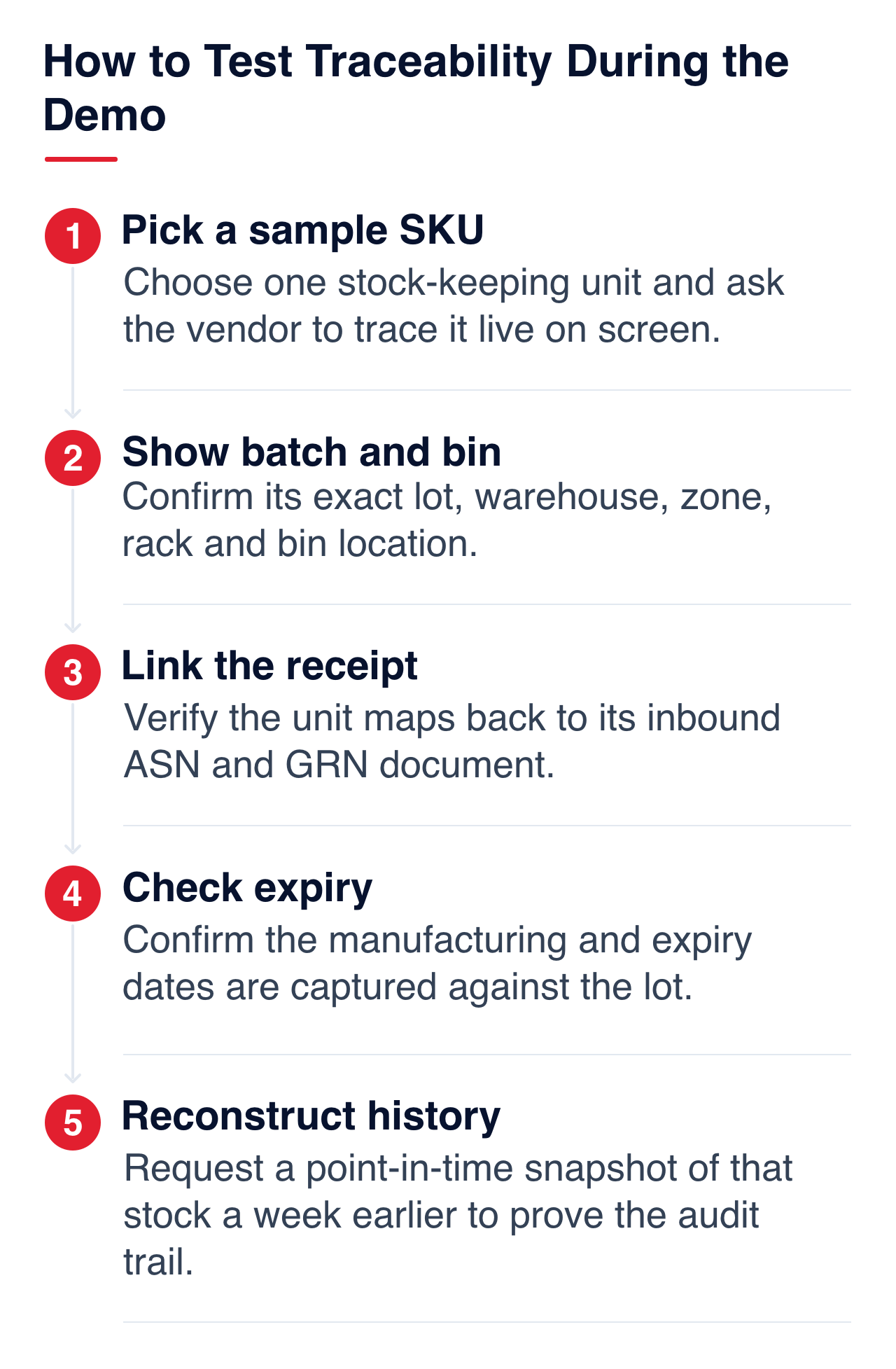
Text version of this process
- 1Pick a sample SKUChoose one stock-keeping unit and ask the vendor to trace it live on screen.
- 2Show batch and binConfirm its exact lot, warehouse, zone, rack and bin location.
- 3Link the receiptVerify the unit maps back to its inbound ASN and GRN document.
- 4Check expiryConfirm the manufacturing and expiry dates are captured against the lot.
- 5Reconstruct historyRequest a point-in-time snapshot of that stock a week earlier to prove the audit trail.
Cold-Chain IoT, Compliance and Audit Trails to Demand
For pharma, food, dairy and specialty chemical businesses, a gap in temperature history is a product recall waiting to happen. Before you sign with any inventory management company in India, verify how its cold-chain and compliance capabilities actually work — not just what the brochure promises.
Temperature monitoring and IoT integration
Ask whether cold storage zones carry IoT sensors that log temperature and humidity continuously, and whether readings surface as client-facing graphs in real time. The right partner should alert you the moment a reefer or cold room drifts out of range — not days later during a manual check. Confirm the data refresh interval, how excursions are escalated, and whether sensor logs integrate with the same WMS inventory platform that tracks your stock. Fragmented systems create blind spots exactly where regulated sectors cannot afford them.
Compliance and documentation Indian sectors must verify
Regulated goods demand lot level inventory and batch expiry tracking with FIFO/FEFO enforcement, so near-expiry stock dispatches first automatically. Insist on point-in-time snapshots that reconstruct exactly what was held, where, and at what temperature on any given date — essential for FSSAI, CDSCO and GST-linked audits. A credible inventory management service maintains a document library of GRNs, LRs and PODs, plus QA checker records tied to each batch.
Audit trails that stand up to scrutiny
Every movement — receiving, putaway, pick, dispatch — should be timestamped and attributable. Combined with real-time stock visibility, this audit trail protects you during inspections and recalls. Clarify how long records are retained and whether inventory management pricing includes this compliance tooling or treats it as an add-on affecting your inventory management cost.

Inventory Management Cost and Usage-Based Pricing Explained
Before you sign with any inventory management company in India, you need to understand exactly how you will be billed. Pricing structures vary widely, and the cheapest headline rate is rarely the lowest total cost. A clear, itemised model protects you from surprise charges and lets you forecast spend as volumes grow.
Common pricing models you will encounter
Most providers use one of three approaches. Flat monthly retainers charge a fixed fee regardless of activity — predictable, but you often overpay in quiet months. Tiered subscriptions bundle a software platform with capped volumes. Usage-based (pay-as-you-go) pricing is the fairest fit for a 3PL inventory management service, because your inventory management cost moves in step with actual throughput.
How usage-based pricing works
Under this model, charges are broken into discrete, measurable units:
- Per SKU or per lot — a small monthly fee for each active SKU or lot-level inventory line maintained in the WMS inventory system.
- Per order (pick-pack-dispatch) — charged on each outbound order fulfilled, often with slabs by line count.
- Per storage unit — billed per pallet, bin or square foot per day or month, with premiums for cold-chain, hazmat or bonded zones.
- Value-added activities — batch expiry tracking, FIFO/FEFO enforcement, QA checks and ASN handling may carry separate line items.
What to verify on the quote
Ask for a sample invoice that shows real-time stock visibility of billable events. Confirm whether inbound receiving, putaway and returns are priced separately. Check GST treatment, minimum monthly commitments, and whether zone-specific storage (ambient versus cold) is rated differently. A transparent provider will map every rupee to an auditable transaction in your portal — so your inventory management pricing scales cleanly from a few hundred to several lakh SKUs.
Three Common Pricing Models
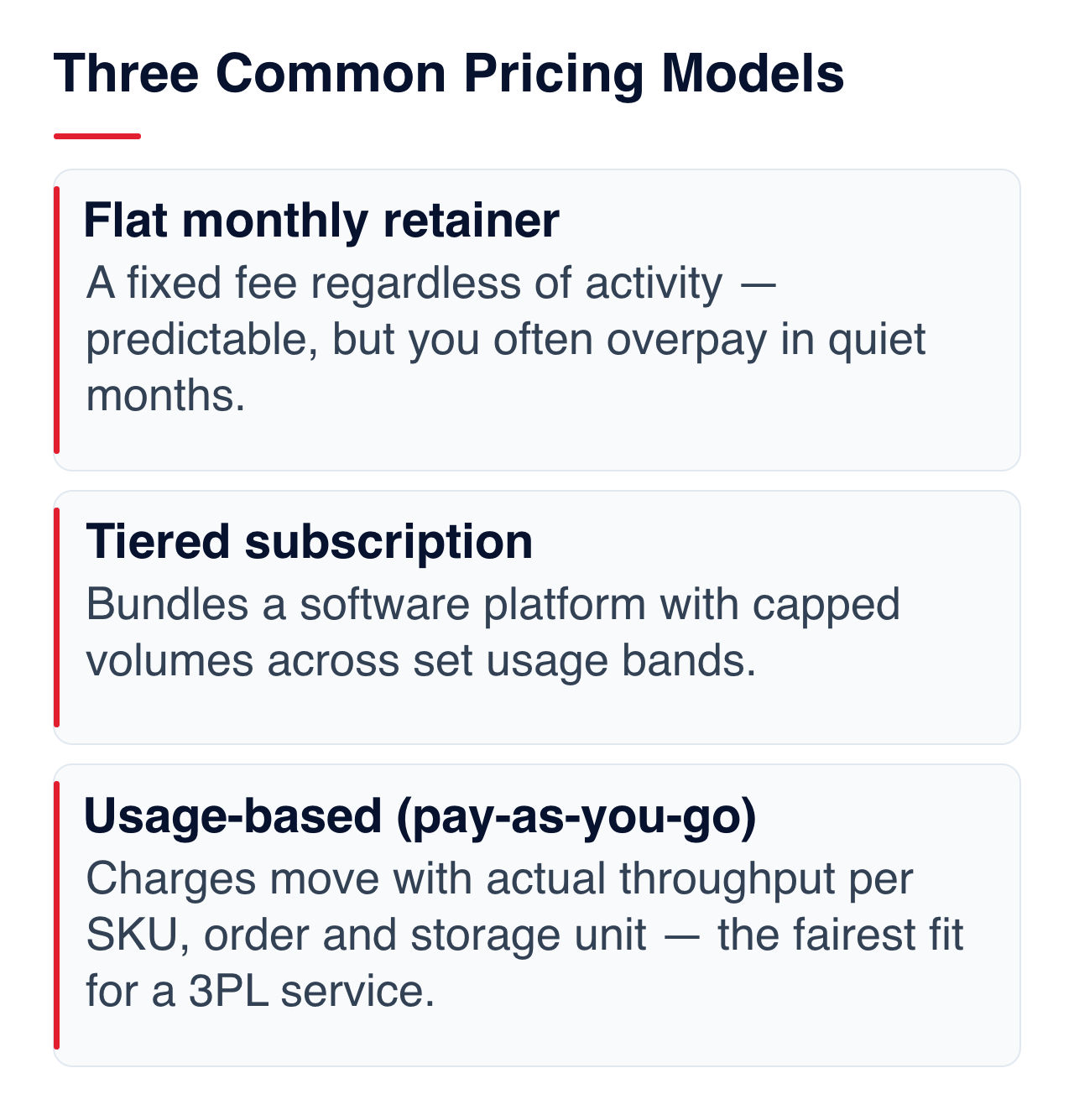
Text version of this infographic
- Flat monthly retainer. A fixed fee regardless of activity — predictable, but you often overpay in quiet months.
- Tiered subscription. Bundles a software platform with capped volumes across set usage bands.
- Usage-based (pay-as-you-go). Charges move with actual throughput per SKU, order and storage unit — the fairest fit for a 3PL service.
The 9-Capability Checklist to Verify Before You Sign
Before you commit to any inventory management company in India, run the vendor through these nine capabilities. Each one maps to a question you should ask during site visits and written into your contract — not discovered after go-live.
1. Granularity and traceability
Confirm the provider tracks stock at lot level inventory, with bin, batch and expiry detail. For pharma, food and FMCG, verify batch expiry tracking with FIFO/FEFO enforcement and point-in-time snapshots so you can reconstruct stock positions for any date.
2. Real-time visibility and portal scoping
Insist on a demo of the self-service portal. Check that real-time stock visibility is multi-tenant and scoped only to your data, with live inventory, order tracking, ASN inbound notices and a document library (GRN, LR, POD).
3. WMS and zone capability
The underlying wms inventory platform should handle zone-aware storage — ambient, cold, hazmat, bonded and quarantine — with per-client storage rules enforced automatically.
4. SLAs in writing
Pin down dispatch turnaround, receiving accuracy, inventory accuracy percentages and portal uptime. Vague promises are a red flag.
5. Integrations
Verify API or connector support for your ERP, marketplace and accounting systems so stock syncs without manual re-entry.
6. Cold-chain monitoring
If you move temperature-sensitive goods, ask for IoT sensor logs and client-facing temperature graphs.
7. Transparent inventory management pricing
Get usage-based inventory management cost broken down by storage, handling and transport, plus applicable GST. Avoid opaque bundled rates.
8. Onboarding plan
Ask for a documented migration timeline, data-mapping approach and a named transition owner.
9. Compliance and references
Confirm bonded warehouse licensing where relevant, and speak to two current clients before signing any inventory management service agreement.
9 Capabilities to Verify Before Signing
- Lot, bin, batch and expiry granularity with FIFO/FEFO enforcement and point-in-time snapshots
- Scoped real-time visibility via a multi-tenant self-service portal with document library
- Zone-aware WMS storage for ambient, cold, hazmat, bonded and quarantine
- SLAs in writing for dispatch, accuracy and portal uptime
- API or connector integrations with ERP, marketplace and accounting systems
- Cold-chain IoT sensor logs and client-facing temperature graphs
- Transparent usage-based pricing broken down by storage, handling and transport plus GST
- Documented onboarding plan with migration timeline and a named transition owner
Conclusion
Choosing an inventory management partner is a decision you live with daily, so verify capability before you commit. The nine checkpoints — lot, bin, batch and expiry tracking, FIFO/FEFO enforcement, zone-aware storage, real-time visibility, accurate inbound and outbound records, transport integration, cold-chain monitoring, transparent usage-based billing, and a self-service portal — separate a genuine operations platform from a basic storage vendor. Ask for proof: a live portal demo, sample GRN and POD documents, and clear GST-compliant invoicing. The right partner reduces shrinkage, improves fulfilment accuracy, and gives you data you can act on across India's demanding supply corridors.
Ready to see these capabilities in action? Book a walkthrough of ASDSPL's platform and warehouses.
Put These 9 Capabilities to the Test
You now know what separates a real inventory management service from a storage provider with a dashboard. The next step is to see it working. Ask for a live login, test a point-in-time snapshot, and watch FEFO enforce itself on the floor. Bring this checklist to your shortlist and verify substance before you sign.
FAQs
Frequently Asked Questions
How much does inventory management service cost in India?
Costs vary by model. Many providers in India charge usage-based pricing tied to SKUs stored, order volumes, or space occupied, while others use fixed monthly retainers. Expect setup fees plus recurring charges, with GST added. Always ask for a transparent breakdown covering storage, handling, integration, and support so you can compare quotes on a like-for-like basis before signing.
How does usage-based inventory management pricing work?
Usage-based pricing charges you only for what you consume, such as per SKU, per order processed, per pick, or per cubic foot of storage used monthly. This suits businesses with fluctuating volumes, converting fixed overheads into variable costs. Verify how the provider meters usage, whether minimum commitments apply, and how GST and surge charges are calculated before agreeing.
What is FEFO and how does it enforce batch expiry tracking?
FEFO means First-Expiry-First-Out, ensuring stock nearing its expiry date ships first. The system records each batch's expiry and prioritises dispatch accordingly, which is critical for pharma, food, and cosmetics businesses in India. Verify the provider enforces FEFO automatically at picking, blocks expired stock, and generates alerts for near-expiry batches to reduce write-offs and compliance risks.
Which is the best inventory management company in India?
There is no single best company; the right fit depends on your sector, SKU count, order volume, and integration needs. India has over 60 inventory management system providers per Tracxn data. Instead of picking by brand, verify the nine capabilities covered in this article, request references, and run a pilot before committing to any provider.
How do I get real-time stock visibility across warehouses?
Choose a provider whose system syncs inventory across all locations through a centralised dashboard, updating stock levels instantly as orders, receipts, and transfers happen. Look for barcode or RFID scanning, API integration with your sales channels, and live reporting. This prevents overselling, enables smarter allocation, and lets you track stock across Mumbai, Delhi, or Bengaluru warehouses from one screen.
What is lot and bin level inventory tracking?
Lot tracking identifies items by production or purchase batch, enabling recalls and expiry control. Bin-level tracking pinpoints the exact shelf or location where each item sits within the warehouse. Together they speed up picking, improve accuracy, and support audits. Verify your provider captures both so you can trace any unit back to its batch and physical position instantly.