Introduction
In today’s competitive business environment, companies are constantly looking for ways to improve efficiency, reduce costs, and enhance customer satisfaction. While sales, marketing, and product development often receive the most attention, one critical area that directly impacts business success is warehouse management.
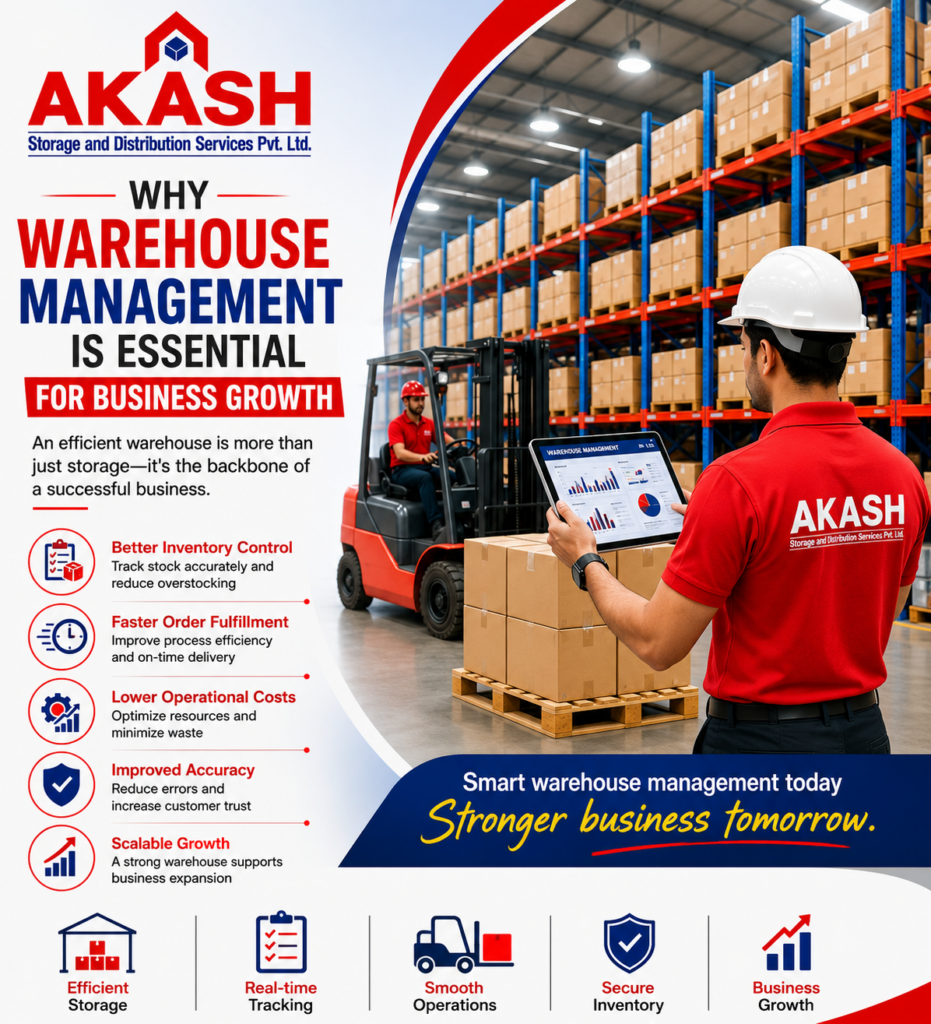
Warehouse management is much more than storing products. It involves controlling inventory, optimizing storage space, managing stock movement, processing orders efficiently, and ensuring products reach customers on time. A well-managed warehouse serves as the backbone of a successful supply chain and plays a vital role in supporting business growth.
Whether a company operates in manufacturing, retail, e-commerce, pharmaceuticals, FMCG, or distribution, effective warehouse management can significantly improve operational performance and profitability.
What is Warehouse Management?
Warehouse management refers to the process of overseeing and controlling warehouse operations, including:
- Receiving goods
- Inventory storage
- Stock tracking
- Order picking and packing
- Shipping and distribution
- Inventory reporting
The goal is to ensure that products move efficiently through the warehouse while maintaining accuracy and minimizing costs.
Modern warehouse management combines skilled personnel, efficient processes, and advanced technology to optimize operations and improve overall business performance.
Why Warehouse Management Matters
Many businesses underestimate the impact of warehouse operations on overall success. However, poor warehouse management can lead to:
- Inventory inaccuracies
- Delayed shipments
- Increased operational costs
- Customer dissatisfaction
- Lost sales opportunities
On the other hand, effective warehouse management creates a strong foundation for business growth by improving efficiency and supporting better customer experiences.
1. Improves Inventory Accuracy
Inventory accuracy is one of the most important benefits of effective warehouse management.
Without proper inventory control, businesses may experience:
- Stock shortages
- Overstocking
- Misplaced inventory
- Incorrect order fulfillment
Accurate inventory records help businesses maintain optimal stock levels and ensure products are available when customers need them.
Modern Warehouse Management Systems (WMS) provide real-time inventory visibility, enabling businesses to track stock movements and make informed purchasing decisions.
When inventory is managed accurately, companies reduce waste and improve operational efficiency.
2. Enhances Customer Satisfaction
Customer expectations have never been higher.
Today’s customers expect:
- Fast deliveries
- Accurate orders
- Real-time order updates
- Reliable service
Warehouse management directly influences all these factors.
Efficient warehouse operations ensure that orders are processed quickly and accurately. When customers receive the correct products on time, trust and loyalty increase.
Satisfied customers are more likely to become repeat buyers and recommend the business to others, contributing to long-term growth.
3. Reduces Operational Costs
One of the biggest advantages of effective warehouse management is cost reduction.
Poorly organized warehouses often experience:
- Excess labor costs
- Inventory losses
- Wasted storage space
- Inefficient workflows
A well-managed warehouse optimizes storage layouts, improves inventory control, and reduces unnecessary handling of goods.
This leads to:
- Lower operating expenses
- Improved labor productivity
- Better utilization of warehouse space
- Reduced inventory carrying costs
Cost savings generated through efficient warehouse management can significantly improve profitability.
4. Increases Productivity
Warehouse productivity has a direct impact on business performance.
Efficient warehouse management helps employees:
- Locate products quickly
- Process orders faster
- Minimize errors
- Improve workflow efficiency
When warehouse processes are organized and supported by technology, employees spend less time searching for inventory and more time completing value-added tasks.
Higher productivity allows businesses to handle greater order volumes without proportionally increasing labor costs.
5. Supports Business Scalability
As businesses grow, warehouse operations become increasingly complex.
Increased sales often lead to:
- Higher inventory levels
- More orders
- Additional product lines
- Expanded distribution networks
Without effective warehouse management, growth can create operational bottlenecks.
A scalable warehouse management system ensures that businesses can handle increasing demand while maintaining service quality.
Companies that invest in efficient warehouse operations are better prepared for expansion and future growth opportunities.
6. Improves Supply Chain Efficiency
Warehouse management is a critical component of supply chain management.
Efficient warehouses help ensure:
- Faster order fulfillment
- Reduced lead times
- Better inventory visibility
- Improved coordination with suppliers
A well-managed warehouse supports smooth product flow from suppliers to customers.
This improves overall supply chain performance and reduces disruptions that can negatively impact business operations.
7. Minimizes Inventory Loss and Damage
Inventory loss can significantly affect profitability.
Common causes include:
- Improper handling
- Theft
- Misplacement
- Damage during storage
Effective warehouse management reduces these risks through:
- Organized storage systems
- Inventory tracking technology
- Security measures
- Standardized handling procedures
Protecting inventory helps businesses avoid unnecessary losses and maintain product quality.
8. Enables Better Decision-Making
Modern warehouse management systems provide valuable operational data.
Businesses can monitor:
- Inventory levels
- Order trends
- Warehouse performance
- Storage utilization
- Product movement patterns
Access to accurate data helps management make informed decisions regarding purchasing, inventory planning, and resource allocation.
Data-driven decision-making improves efficiency and supports long-term business success.
The Role of Technology in Warehouse Management
Technology is transforming warehouse operations across industries.
Warehouse Management Systems (WMS)
A WMS helps businesses:
- Track inventory in real time
- Improve order accuracy
- Optimize storage locations
- Generate operational reports
Barcode and RFID Technology
These technologies improve inventory visibility and reduce manual errors.
Automation
Warehouse automation supports:
- Faster order processing
- Reduced labor dependency
- Improved operational consistency
Cloud-Based Solutions
Cloud technology provides remote access to warehouse data and enhances collaboration across supply chain partners.
Businesses that embrace technology gain a competitive advantage through improved efficiency and visibility.
How to Improve Warehouse Management
Businesses can strengthen warehouse operations by:
Organizing Storage Layouts
Efficient layouts reduce travel time and improve productivity.
Implementing Technology
Adopt WMS, barcode scanning, and inventory tracking systems.
Training Employees
Well-trained staff improve accuracy and operational performance.
Monitoring Key Performance Indicators (KPIs)
Track metrics such as:
- Inventory accuracy
- Order fulfillment rates
- Picking efficiency
- Storage utilization
Partnering with Professional Warehousing Providers
Experienced warehousing partners provide expertise, infrastructure, and scalable solutions that support business growth.
Why Businesses Choose Professional Warehousing Services
Many companies partner with professional warehousing providers to improve efficiency and reduce operational complexity.
Benefits include:
- Professional inventory management
- Secure storage facilities
- Advanced warehouse technology
- Flexible storage capacity
- Distribution support
- Cost-effective logistics solutions
A trusted warehousing partner allows businesses to focus on core operations while ensuring efficient inventory management and order fulfillment.
Conclusion
Warehouse management is no longer just a back-end operational function—it is a strategic business asset. Effective warehouse management improves inventory accuracy, reduces costs, enhances customer satisfaction, and supports supply chain efficiency.
As businesses continue to face increasing competition and customer expectations, investing in warehouse management becomes essential for sustainable growth and long-term success.
Organizations that prioritize warehouse efficiency will be better positioned to improve profitability, strengthen customer relationships, and scale their operations confidently.
